
Pumble
Research Insights
Goals & Strategy (KPIs)
The core mandate for the Pumble redesign was to eliminate competitors' friction points and strategically align the product's value proposition with the broader Cake.com freemium ecosystem for growth and monetization.
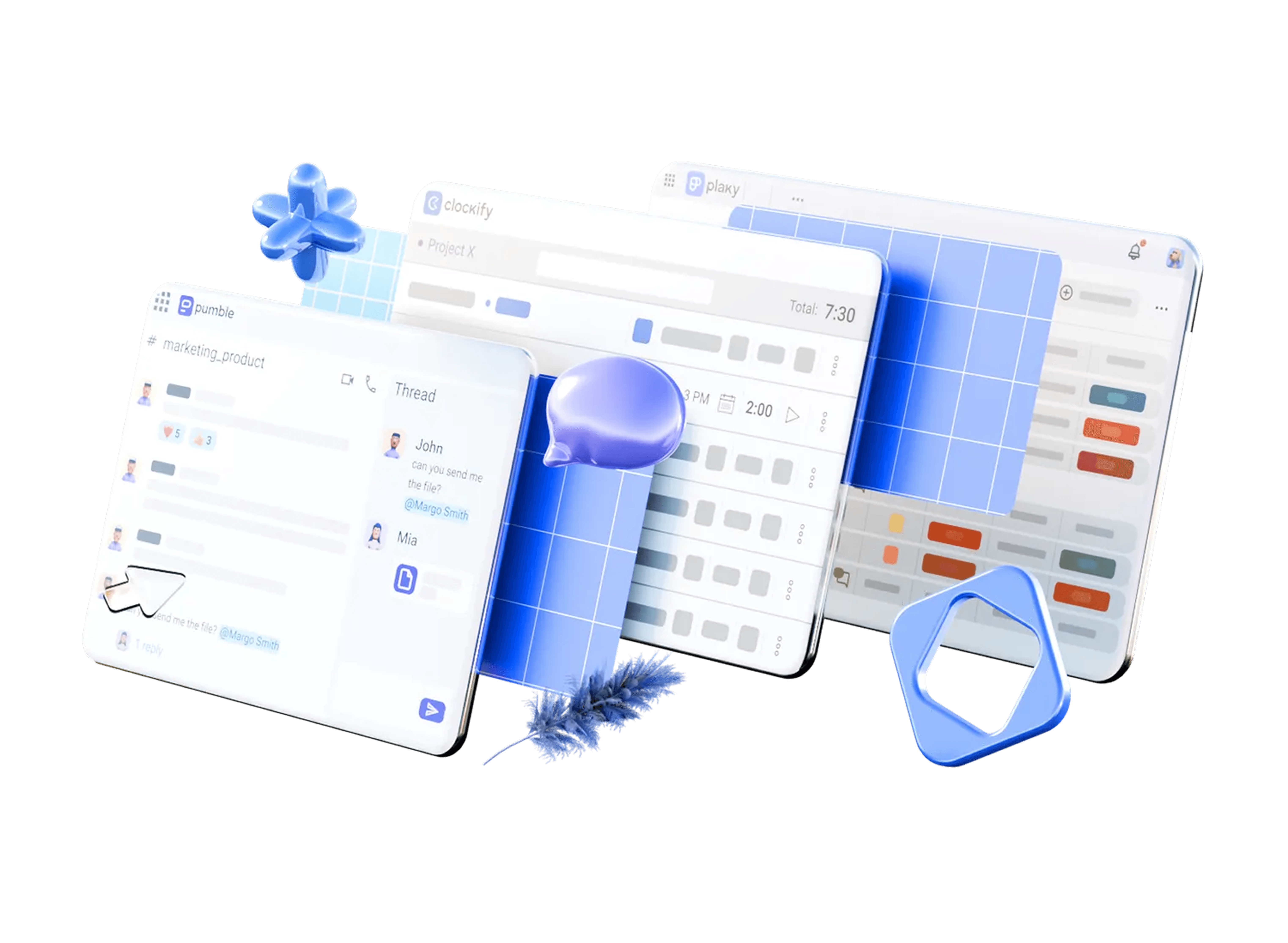
Conversion Goal (Monetization): Drive 25 % free-to-paid conversion to Cake.com's bundle package (Clockify, Pumble, Plaky) by optimizing the user journey toward team-level value.
UX Goal (Efficiency): Reduce the time users spend searching for key information by 40%, directly addressing the competitor's "knowledge loss" problem and increasing user satisfaction.
Activation Goal (Friction): Accelerate the time-to-value by driving Faster Onboarding (TTFA), ensuring teams experience Pumble's core functionality quickly and effortlessly, 60-second onboarding from sign-up to first message.

42% of SMBs cite “too complicated” as #1 reason for abandoning chat tools. 28% of interviewed users cited onboarding complexity, and drop-offs occurred at a 35% rate during setup.
The Activation Wall
Slack’s 10k message cap forces 38% of teams to upgrade too early (Frustrating Paywall).
In our product, users were aware of the bundle but failed to understand the integrated value of Pumble, Clockify, and Plaky, viewing them as separate apps.
The Monetization Blocker
85% of users say “search is the feature I use most.” BUT 40% of users are frustrated by history loss after 90 days. The primary search tool prioritized channels over direct content, causing 46% of users to abandon a search after 3 attempts.
The Search & Value Trap
"I have to download all our files every 90 days. It makes the system feel temporary, and I just stop using it for important conversations."
-User Quote
Our conclusion
Make knowledge findable in under 3 seconds — for free
Design Strategy
Our initial mandate involved a full visual overhaul to distinguish Pumble in the market. However, quantitative analysis and usability testing revealed that radical change was an activation blocker. The data pointed toward a more strategic, friction-reducing approach.
Strategic Pivot: The design team formally shifted focus from a visual redesign to a functional simplification. The goal was to leverage existing muscle memory from established competitors while removing their core pain points.
Key Solutions
Executing the Strategy
2. Simplified & Responsive UI:
Reduced feature clutter by 30% (fewer sidebar items), creating a cleaner, goal-focused interface that minimizes cognitive load.

Results