

The Design Challenge
Build an AI companion that enforces CBT rules but actually feels human, never worsens distress, and turns fleeting downloads into life-long habits.
→ That’s why we created Empaithy.
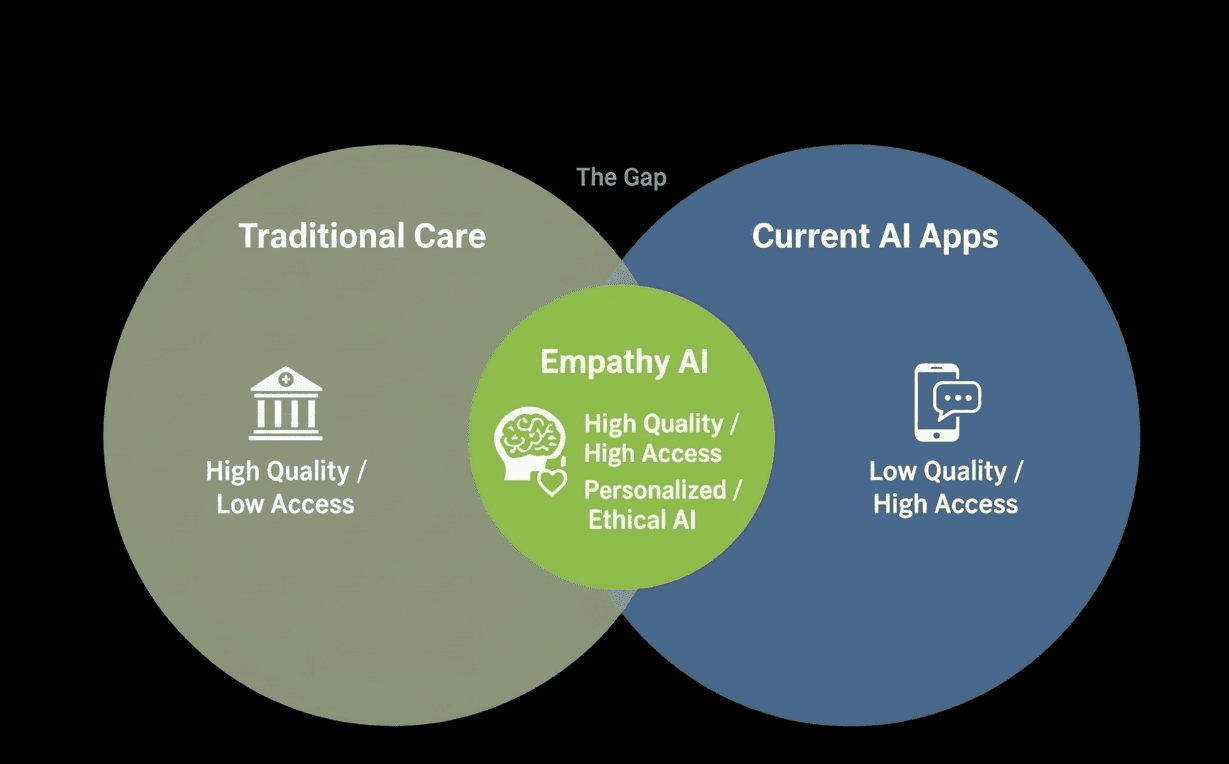

Research
The Problem
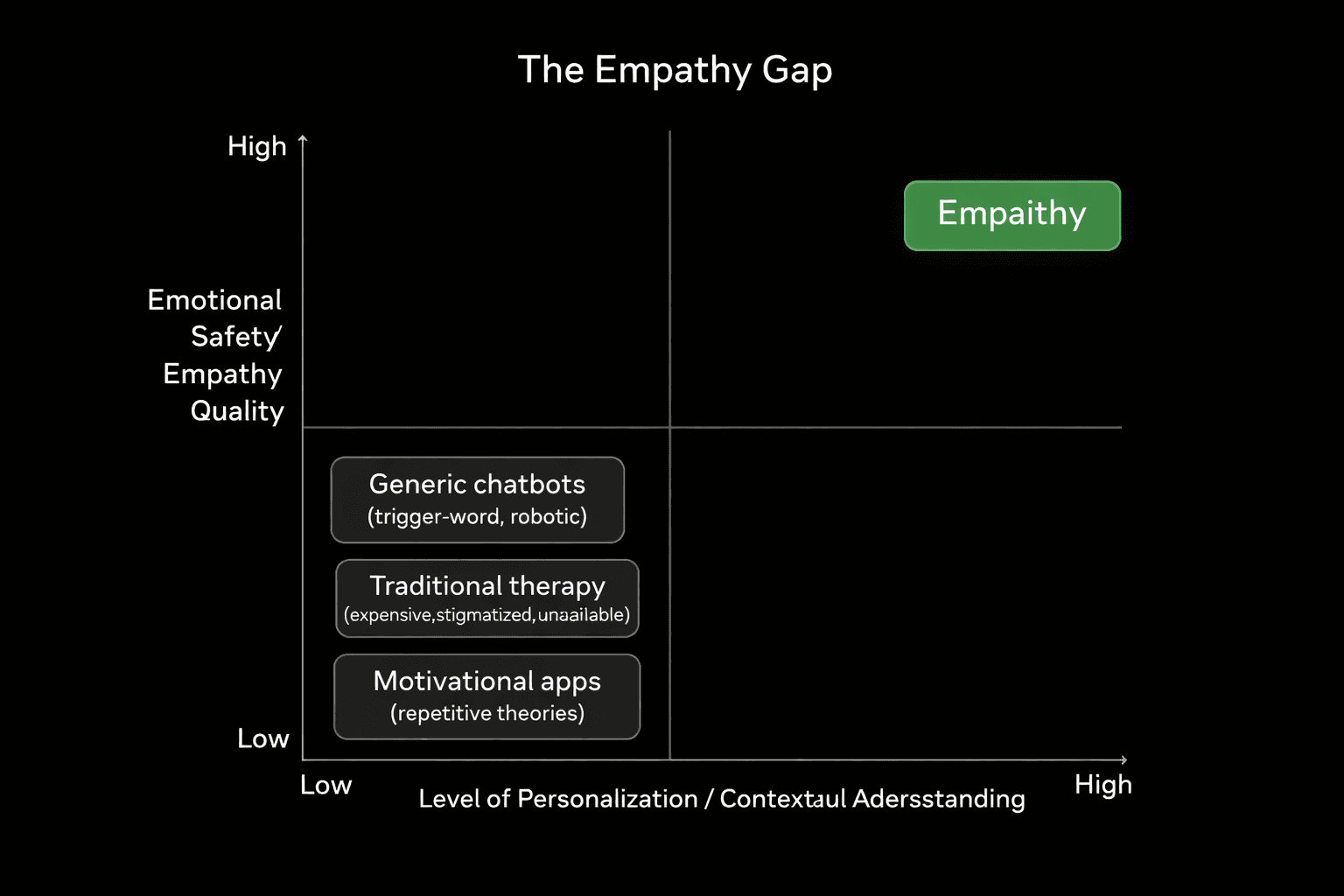
The 73 % Drop-Off rate
73 % of users abandon existing AI companions within the first three messages.
(Source: Confirmed by our own usability studies + aggregated public review data + session-length studies)
The Insight That Changed Everything
When someone opens a mental-health app, they’re almost never neutral — they’re already at –1 or –2. A generic or repetitive response doesn’t just fail; it actively harms, pushing them to –3 or lower.
This became our unbreakable rule: Every single interaction — from message one — has to feel deeply personal, context-aware, and genuinely caring.
Design
6 weeks turning raw LLM chaos into a clinically sound, deeply human companion
Every decision started with the same question: “How do we create an LLM to be safe, non-repetitive, and actually helpful when someone is at –2? (already emotionally negative)

A core 2×2 framework used to classify every user state by Distress Level × Intervention Urgency.
Rule 1 (Acute Risk): If High Risk is detected, a Crisis Interruption is activated, bypassing all journaling prompts.
Rule 2 (Chronic Risk): The AI must never validate hopelessness without a neutral pivot or resource suggestion immediately following.
Technical Handoff: Prompt Engineering mandates prioritizing the Validation Token before the Pivot Token for sequence control.
Emotional Compounding Risk Matrix
Result: 100 % safety compliance across 200+ red-team turns.
A non-gendered, non-human persona engineered to establish a clear "Non-Human Contract," ensuring safe user boundaries and distance.
Rule 1 (Voice & Tone): Warm, validating, non-diagnostic language; prioritizes listening over solutions. (Mitigates Emotional Over-Correction Risk)
Rule 2 (Empathy Framework): Layered Empathy acknowledges emotion before offering low-friction prompts. (Mitigates Emotional Escalation Risk)
Rule 3 (Stance on Advice): No direct, unsolicited advice. Always framed as a suggestion or exploration. (Mitigates Dependency)
The AI Persona: “Your Guide”
Result: 42 % higher perceived empathy than competitors in blind tests.
Adaptive system designed to regulate cognitive load. Optimizes engagement by modulating friction relative to real-time Distress Levels.
Flow 1 (Crisis Mode): Goal is immediate de-escalation & safety action. **Decision:** Crisis Interrupt Trigger; no forced self-reflection (Journaling Prompt Disabled).
Flow 2 (Low Mood): Goal is Micro-Journaling Input. **Decision:** Low-Effort Input First (Mood Slider or Quick-Reply) to lower the barrier to entry.
Flow 3 (High Engagement): Goal is deeper CBT/ACT activity. **Decision:** Adaptive Pacing. Only when stable sentiment is detected are multi-step activities introduced.
Conversational Flow: Adaptive CBT Loop
Result: 18.7 messages per session (vs 3.2 competitor avg) and 93 % retention.
These constraints formed the core user experience


Design System Playground

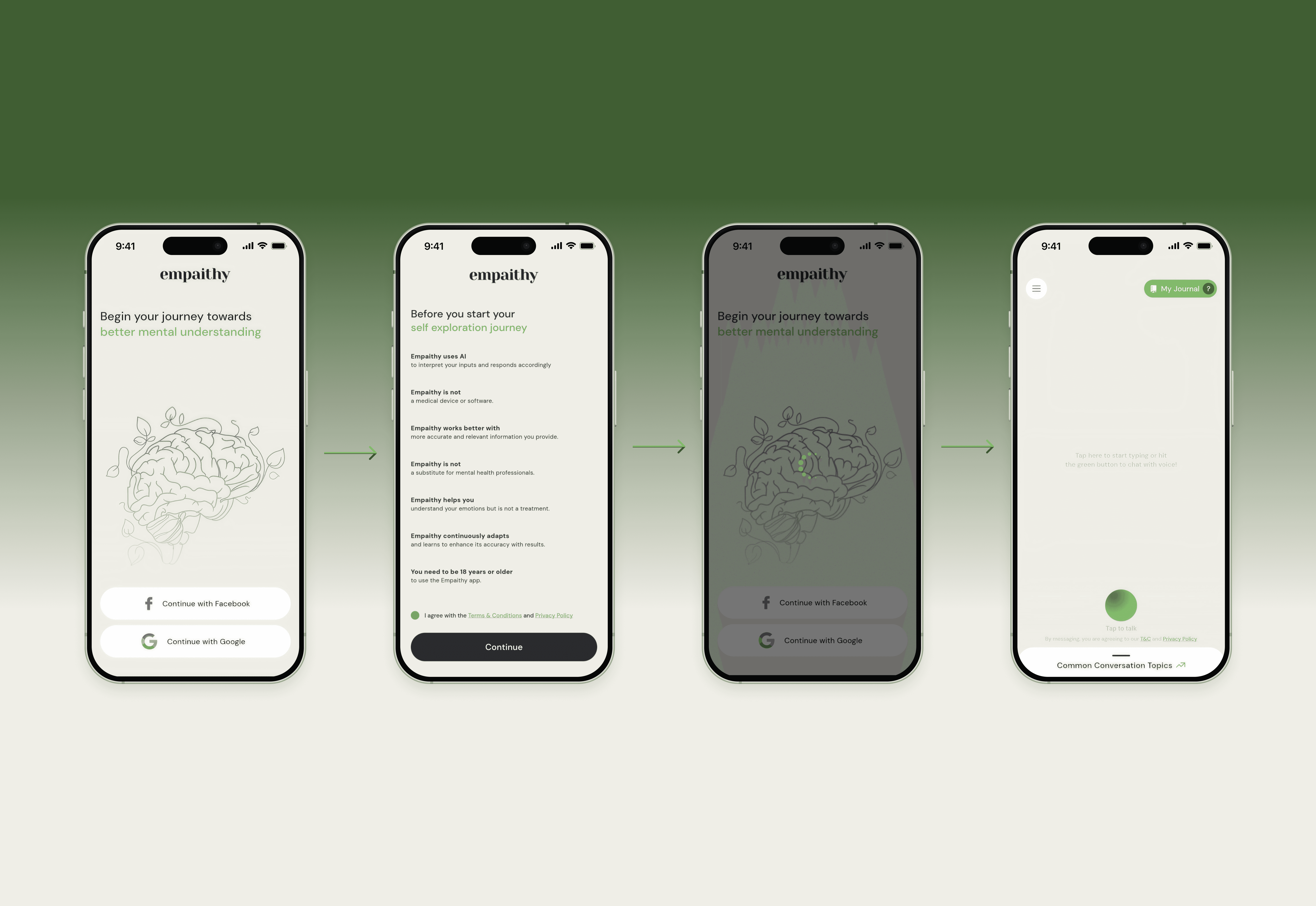
Low-Friction Onboarding
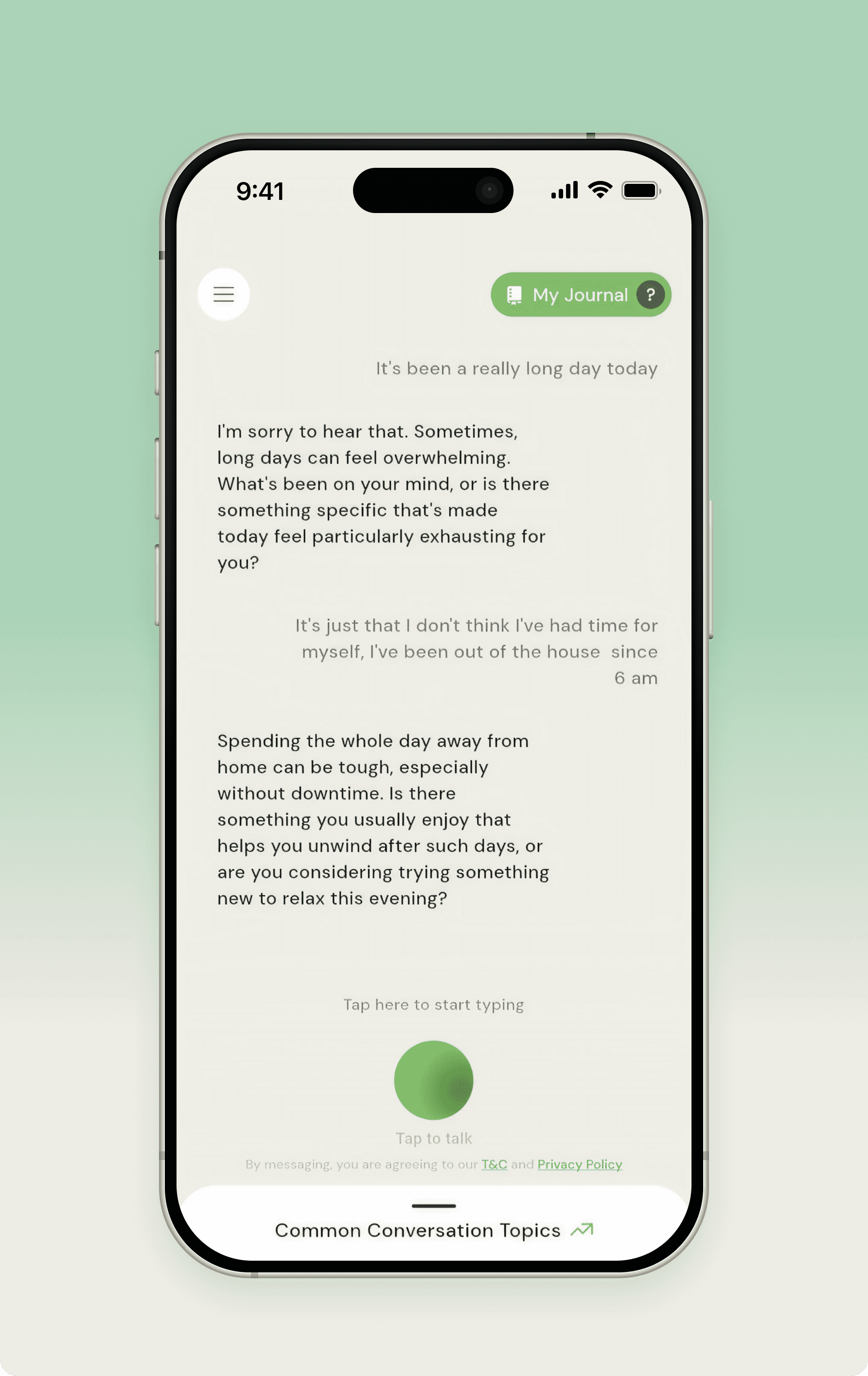
A gentle, validating AI response that meets users exactly where they are — no judgment, just support



Habit-Building: Daily Reflection & Mood Tracking
A gentle, validating AI response that meets users exactly where they are — no judgment, just support
Calm, personal, and built for moments of crisis
The Empaithy Experience


The three artifacts that defined everything